Why Global Businesses Are Paying Attention
A new economic alliance may soon reshape global trade routes, investment flows, and international business strategies.
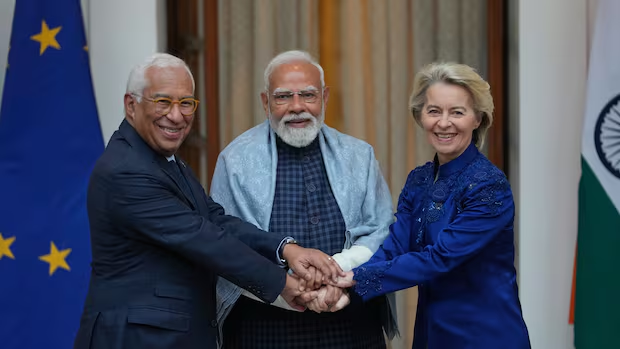
The European Union and India are accelerating negotiations on a major trade agreement that could become one of the most influential economic partnerships of the next decade. As uncertainty continues to affect global markets, both sides are searching for stronger and more reliable partnerships that can support long-term growth.
For many analysts, the EU-India trade deal is not just another agreement between governments — it is a signal that the global economic order is beginning to shift.
A Partnership Built on Opportunity
India’s economy has been expanding at an impressive pace over the past several years. With its rapidly growing middle class, strong technology sector, and large consumer market, the country has become increasingly important for international investors and multinational companies.
At the same time, Europe is actively looking to diversify trade relationships and reduce dependence on limited manufacturing regions. Businesses across the EU are searching for new markets, stable supply chains, and long-term investment opportunities.
This is where India enters the picture.
The potential agreement would allow European and Indian businesses to cooperate more closely while reducing many of the trade barriers that currently slow economic activity between the two regions.
What Could Change if the Deal Is Finalized?
Experts believe the agreement could have a major impact on several industries simultaneously.
Areas expected to see significant growth include:
- Artificial intelligence and technology
- Renewable energy projects
- Automotive manufacturing
- Pharmaceuticals and biotechnology
- Infrastructure development
- Financial technology and digital payments
- Logistics and global supply chains
European companies may gain better access to India’s massive consumer market, while Indian firms could benefit from easier entry into European economies.
Lower tariffs and simplified regulations would likely make international operations more efficient and attractive for businesses on both sides.
Technology and AI Becoming Central to the Partnership
One of the most interesting aspects of the negotiations is the increasing importance of technology cooperation.
India has become one of the world’s largest technology hubs, producing millions of highly skilled engineers and software developers. European firms are already investing heavily in India’s digital economy, particularly in areas such as artificial intelligence, cloud computing, cybersecurity, and fintech.
Many experts believe the future relationship between Europe and India will be shaped not only by traditional trade but also by technological innovation.
As AI continues transforming industries worldwide, cooperation between Europe’s financial strength and India’s technological talent could create powerful new opportunities.
A Response to Global Economic Uncertainty
The renewed push for the agreement comes during a period of rising global instability.
Trade tensions between major economies, disruptions in shipping routes, inflation concerns, and geopolitical conflicts have forced governments to rethink economic strategy. Countries are increasingly trying to build partnerships that provide greater stability and reduce long-term risk.
For Europe, India represents a fast-growing democratic partner with significant economic potential.
For India, Europe offers investment, advanced technology, infrastructure cooperation, and access to some of the world’s wealthiest markets.
This mutual interest is helping drive negotiations forward.
Challenges Still Need to Be Solved
Despite the growing momentum, reaching a final agreement remains difficult.
Several sensitive issues continue to be debated, including:
- Environmental standards
- Agricultural protections
- Intellectual property rights
- Labor regulations
- Data privacy rules
- Import and export tariffs
Negotiators from both sides are attempting to balance economic growth with political and regulatory concerns.
Still, many observers believe both Europe and India now have stronger reasons than ever before to complete the deal successfully.
Investors and Markets Are Watching Closely
Financial markets and global corporations are closely monitoring every stage of the negotiations.
Many investors believe a finalized EU-India agreement could stimulate long-term economic growth, attract foreign capital, and strengthen business confidence across multiple industries.
Some economists have even suggested that the partnership could eventually become one of the most strategically important economic relationships in the world.
A New Chapter for Global Trade
The EU-India trade agreement reflects a larger transformation happening across the global economy.
As traditional economic alliances evolve and new powers continue to rise, countries are adapting to a rapidly changing international landscape. Europe and India appear determined to position themselves at the center of this new era of global cooperation.
If negotiations succeed, the agreement could influence trade, technology, investment, and international business strategy for decades to come.
For now, the world is watching as two major economic powers move closer toward a partnership that could redefine the future of global commerce.